Thursday, May 31, 2012

Turkey: The Forgotten American Ally

By Preston Cooper


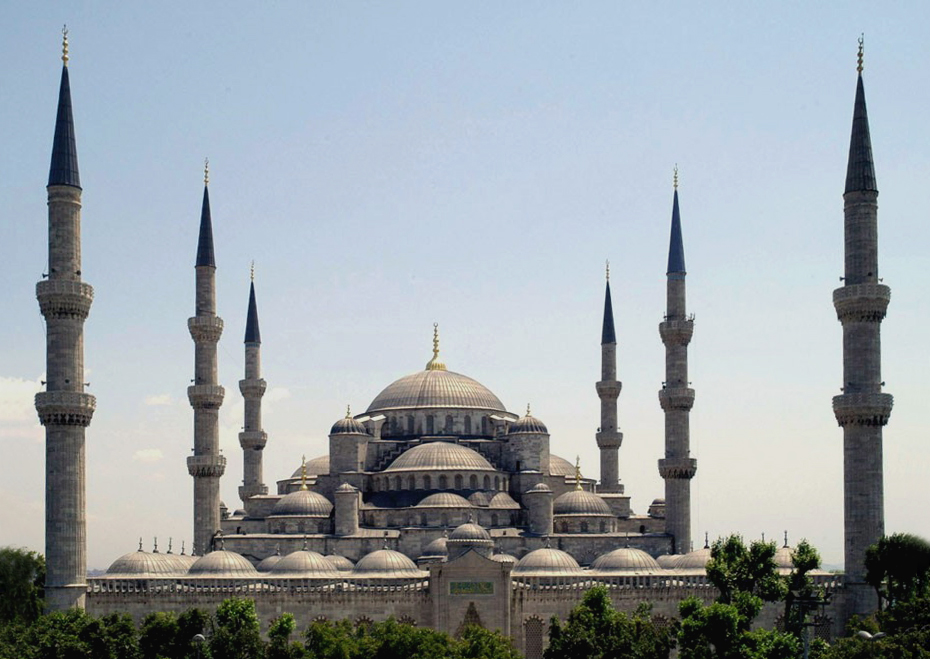
Courtesy of Wikipedia
The Middle East is in flames. Fighting in Syria grows bloodier by the day. Conflicts between Israel and Palestine look likely to break open again. Tensions regarding Iran are escalating, and Afghanistan persists as the war that won't end. Despite all the violence, all the anti-American sentiment, we do have allies in the region. And it's important that we don't forget them.

Two years ago today, a chasm opened between our two closest allies in the region, a chasm that never really closed. When pro-Palestinian activists attempted to sail an aid flotilla into the impoverished Gaza Strip, Israeli soldiers boarded the boats and killed nine Turkish activists. Plenty of harsh condemnations and severed diplomatic ties between Israel and Turkey followed the incident. And the US did relatively little to mediate the conflict or mend the damage.

If anything, we took Israel's side - and taking sides is a big no-no when settling disputes between allies. Rick Perry went so far as to call Turkey's Prime Minister an "Islamic terrorist" for his spirited language against Israel. All in all, we left Turkey alone and stewing.

This egregious lapse of foreign policy judgment has gone unnoticed and unfixed. In many ways, Turkey is a more important ally than Israel. It is a large country with a strong economy, a big influence in the region. It is one of few stable, democratic governments in the Middle East. And unlike Israel, it has the respect of neighbors who may be less friendly to the United States, with the ability to serve as a mediator. Most importantly, it is tolerant of both Western and Arabic cultures, a paragon of progressivity for the rest of the Middle East to follow.

It is high time that the American government started paying more attention to Turkey. I hope that Secretary of State Clinton and the Obama Administration will reach out to our Anatolian friends and let them know that like Israel, they have our full support. We can start by pressuring Israel to mend relations with Turkey, and request that Turkey do the same.

If the conflict in Syria explodes beyond its borders to neighboring countries, as many experts fear, Turkey must know that the United States will provide support if requested. We are a nation that stands behind its allies, and Turkey is no exception.

Wednesday, May 30, 2012

Five Do's and Don'ts for Mitt Romney, GOP Nominee

By Preston Cooper


Let's have a round of applause for the 2012 presidential nominee of the Republican Party, Mitt Romney. Last night, the Texas primaries gave him enough delegates to officially clinch the GOP nod. After knocking down thirteen challengers in as many months of campaigning, Romney has entered the second act of the presidential contest: the general election.

Game on, Obama.

In the next five months, Romney must convince the country that he is better equipped to occupy the Oval Office than the sitting president. As of now, he's not up to the challenge. Despite a lethargic economy and rumblings of renewed conflict in the Middle East, most polls still show the candidates tied. This election would be an easy win for the Republicans if Romney would take a little more initiative. Why do we not know his intentions after the repeal of Obamacare, or the hard numbers of his plan for deficit reduction?

If we're going to return Obama, Romney has to prove that he's worth our store credit.

Therefore, I've compiled a list of five do's and don'ts for our GOP nominee. Barring complete financial meltdown or nuclear war with Iran (both of which I'm trying not to count on), Mitt Romney must change his game plan to solidly win the White House.

DON'T spend time on social issues. Obama is not waging a war on religion; his war is on commonsense economic reforms. Social issues such as gay marriage and abortion are also where we find some of your biggest flip-flops. The economy is your strong suit, and it remains weak in critical swing states like Florida and Nevada. Use it to win the election, and then fix it.

DO press immigration reform. Hispanics, to whom immigration is a top issue, are a critical voting bloc that Obama won handily in 2008. We've heard a lot of talk about what you're going to do with illegal immigrants; let's talk about how you'll simplify the process for people coming here legally. Immigration has long been a backbone of this country, and voters want to know what you're going to do about it.

DON'T keep your plans for the country shrouded in ambiguity. My big issue is the nation's balance sheet; I want to know how you're going to cut taxes by twenty percent while also balancing the budget and bringing down the debt. Let's see some numbers.

DO spend a little time on the real Mitt Romney. If you're uncomfortable sharing personal details, dispatch Ann to do it for you. She can tell us about how you helped a Bain associate search for his missing daughter, or about time with the family that didn't involve strapping a dog to the roof. Don't let this distract from the real issues, though; in 2008 we elected a funny, interesting, nice-guy president with zero preparedness for the job.

DO talk about an issue important to voters across the political spectrum that has gone almost completely untouched this election season: partisan gridlock. In 2008, Candidate Obama promised to unite the parties and ended up dividing them like no other president in history. Gridlock has defined American politics for the last two years, giving us imbalanced budgets and downgraded debt. How are you going to end the stalemate in Congress and move the country forward? Talk about it. This is an issue you can win on.

Tuesday, May 29, 2012

Mitt Romney Isn't the Only Flip-Flopper

Let's hold Obama accountable for some of the one-eighties he has made in his past four years as President. Liberals accuse Mitt Romney of being a flip-flopper, but they don't have to look beyond their own ranks to find someone ready to take a politically expedient position on the campaign trail, then renege on it once safely in the Oval Office. Take a look at ours, and create your own "Flip-Flop Obama" Memes here.


Monday, May 28, 2012

Honoring the Fallen on Memorial Day

Photo courtesy of Christopher Hollis

As a soldier in New Guinea during World War II, my grandfather contracted a strain of malaria which remained dormant in his body for over forty years. Long after he returned to the United States to raise my father and aunt, the disease finally caught up with him, and he joined the fallen heroes of war whom we honor on Memorial Day.

I hope all of you enjoy your time off today, but please take a few minutes and think of someone who died for their country. I'm not only talking about veterans, but about all who gave their lives to protect the freedom that makes this country what it is. There are forces, both outside and inside the United States, that seek to challenge our way of life. But there are always people, American heroes, who stand up against those forces, and this Memorial Day let's be sure to thank all of them.

So take a few minutes and think of a veteran, police officer, firefighter, civil rights activist, paramedic, nurse, or anyone else who died to protect this country and make it a better place. There have been many challenges facing this country throughout its two-hundred-thirty-six-year history, but we have survived them all because of American sacrifice, American courage, and American unity.

Saturday, May 26, 2012

Private Sector is the Future of Space Exploration

By Preston Cooper


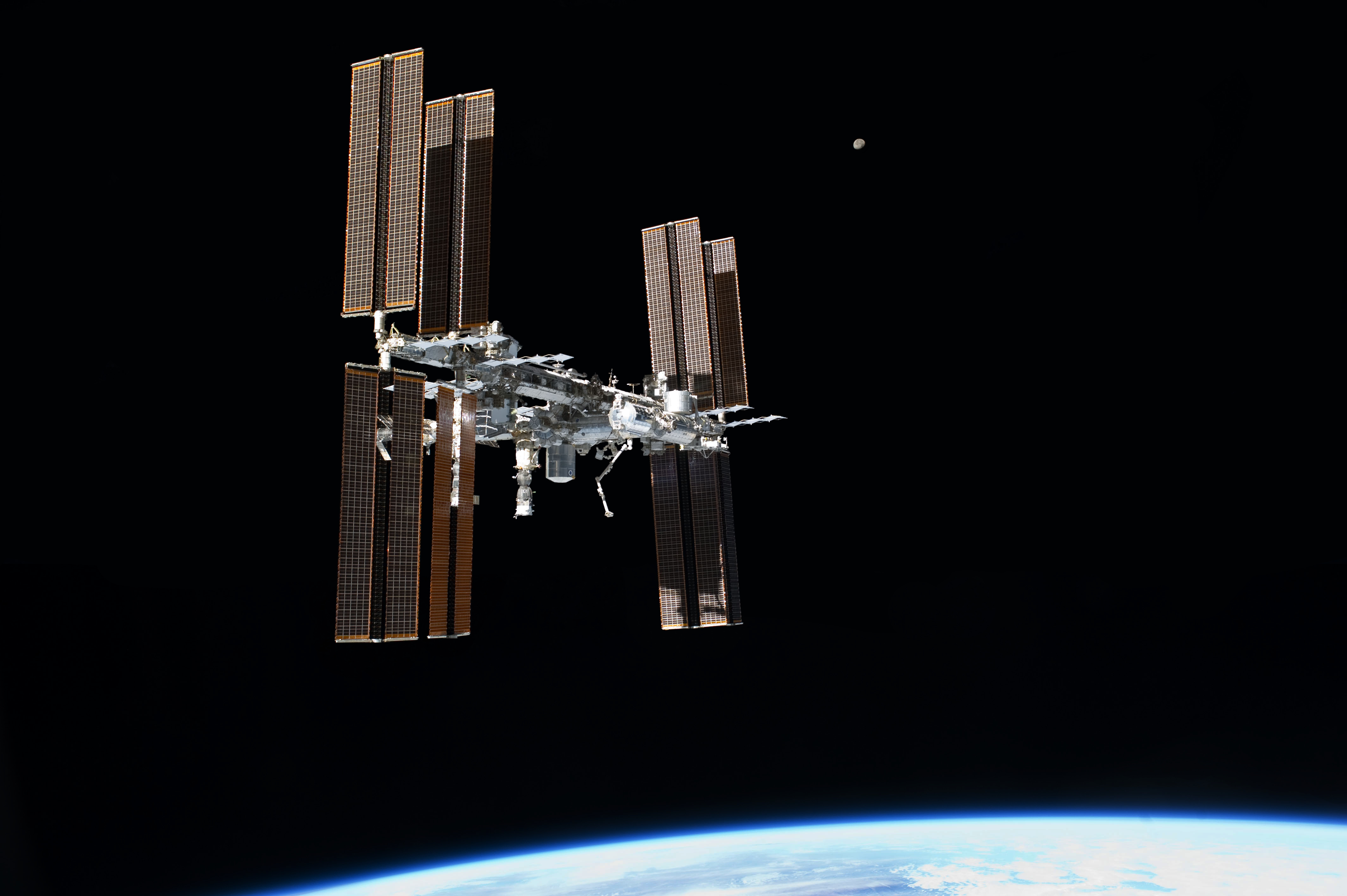
Courtesy of NASA
Yesterday, a remarkable advance occurred for the technological universe of mankind: a private company docked a spacecraft at the International Space Station. Called SpaceX, the company was commissioned by NASA to run supplies to the orbiting spaceport, instead of putting them aboard Russian rockets as it has done ever since the demise of the Space Shuttle.

Every child born in the Space Age is probably wondering what happened to the missions to Mars. Why aren't we flying to the moons of Jupiter? Why haven't we built a base on the moon?

The technological advances we've made in the last few decades have all been in this world. Indeed, the technology that defines the current era is not of the extraterrestrial sort, but works to improve our lives here on Earth. The internet, smartphones, and other communications technologies are the most sophisticated innovations that have a direct bearing on our lives here in America. And who would have thought, even ten years ago, that an internet access point, a music library, and a gaming center could all fit into a cell phone?

One of the reasons that communications technology has been such a success, while space travel has largely stalled over the last few decades, is that communications technology originated in the private sector. There are other factors at play, of course, but being developed by companies rather than government bureaucracy is a big leg up. Private companies compete to employ the best and the brightest minds, and tailor their products specifically to the general public. After all, if you don't make a sellable product, you're out of business.

There are many ways that a private company can turn a profit off space travel. Governments, other companies, or academic institutions may contract them to ferry supplies into space or conduct research in space. Private companies may also sell seats on commercial flights in and out of the cosmos; Virgin Airlines recently announced plans to create a new division, Virgin Galactic, that flies beyond our atmosphere.

NASA, while working towards an admirable goal, does not have the same drive to create an end product that will captivate the heart of the American public. They are above all else a government agency, and the invisible hand is not at play. That's why SpaceX's mission to the ISS is such a remarkable accomplishment. Perhaps, with private companies at the helm, space travel can reinvigorate the American imagination.

Thursday, May 24, 2012

JP Morgan Losses: A Crisis Done Right

By Preston Cooper


Photo courtesy of Wikipedia
Last week's $2 billion (now likely much higher) trading loss at megabank JP Morgan Chase sent the financial world into a frenzy. The bank's stock plunged more than twenty percent, and regulators in Washington leaped at the opportunity to call for stronger oversight of Wall Street. Many have called for the resignation of JPM's CEO, Jamie "Panache" Dimon, from the New York Fed's Board of Governors.

I don't see what the hullabaloo is about.

Yes, JPM's trading loss was large, but the bank will likely still turn a profit in the second quarter. This will not cripple the company by any means. What's more, had something like this happened at JPM's two ugly stepsisters - Bank of America and Citi - it would probably not even make headlines.

JPM remains a very well-managed bank. It will not be needing a taxpayer bailout anytime soon. The company will absorb its own losses, the managers responsible for the damage will resign, and business will eventually return to normal. This is how a crisis should be done. The tumult in the media and on Wall Street is unnecessary.

Moreover, the response of Washington regulators reveals that the loss has had a good effect - it is inspiring discussion about how to improve the financial regulatory system. This is good - conservatism does not oppose regulation; it opposes inappropriate or inefficient regulation. Good regulation is healthy for the economy, as it mitigates damage in times of crisis.

As far as I'm concerned, financial regulation has two aims:

1. To protect depositors' money. When you deposit money in a bank, you should - and do - have a guarantee that your money is safe. The government has a duty to make sure banks' practices do not jeopardize the money you're saving for college or retirement.

2. To protect the economy from the failure of systemic institutions. If the failure of an institution will have a major negative effect on the country, it is necessary for the government to ensure that the institution does not incur undue risk of collapse. However, under no circumstances is it appropriate for the government to bail out a failing institution with taxpayer money.

If regulation of the financial sector does not pertain to one of these two goals, it is bad regulation and is most likely antithetical to the free market. JP Morgan is a systemic institution as well as a savings bank, so increased oversight of its trading practices may be necessary to ensure that it does not put depositors' money or the larger economy at risk. However, I am confident that JPM will emerge from this setback stronger, an exemplar of how to properly navigate a crisis.